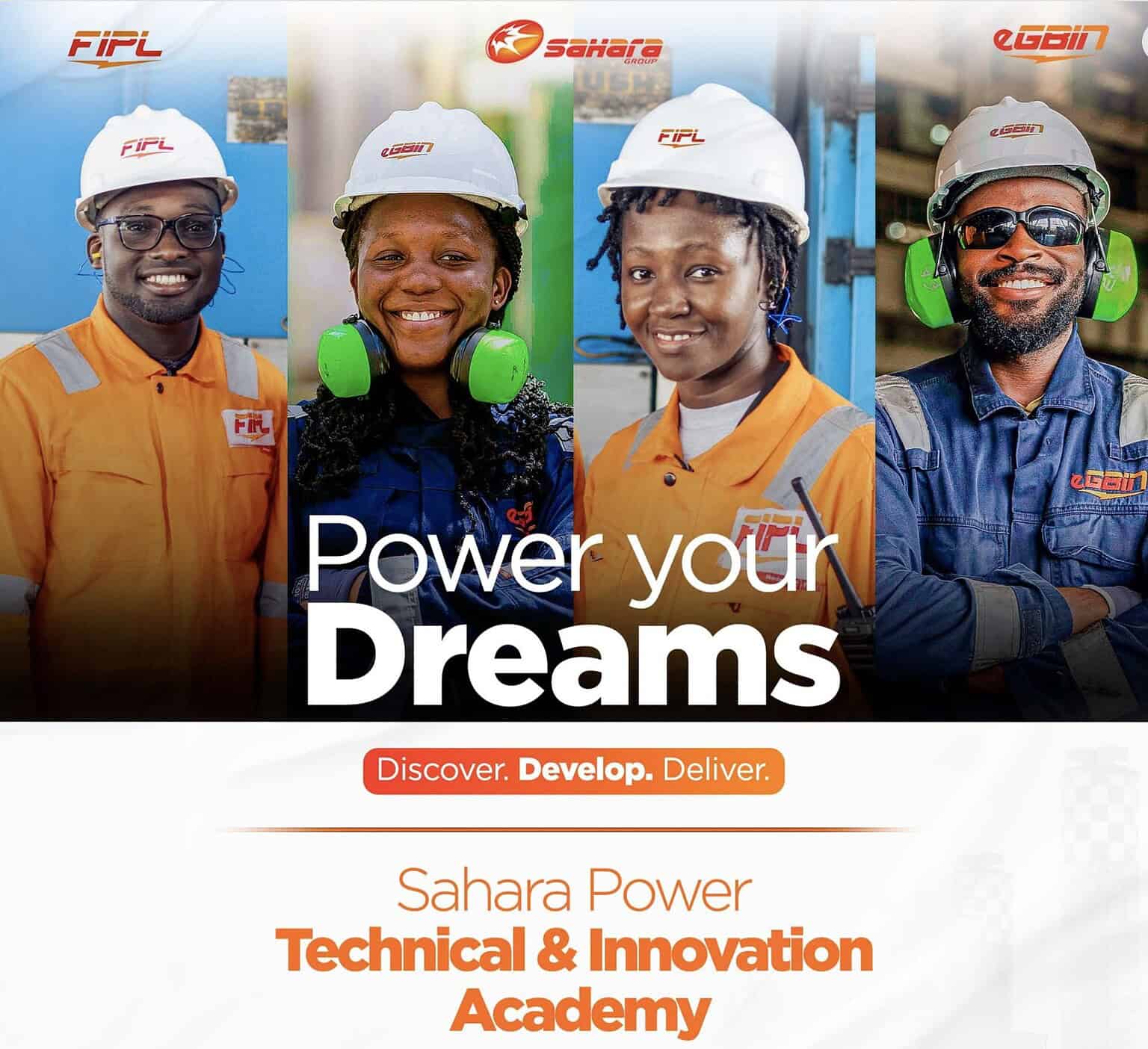

Overview of the 2025 Graduate Engineering Programme
The Sahara Power Technical and Innovation Academy has opened applications for its 2025 graduate intake, offering young engineers a pathway into Nigeria’s electricity and energy industry. EducationNGR also learnt that the academy provides hands-on technical training, real plant exposure, and structured professional development for graduates passionate about engineering and long-term careers in power generation and distribution.
About Sahara Power Technical and Innovation Academy
The academy hosts the Sahara Graduate Engineering Programme, designed to equip graduates with the skills needed for plant operations, maintenance, and applied engineering work.
What Participants Gain
- Practical exposure to real generation assets and control systems
- Hands-on tasks that connect classroom theory to real operational challenges
- Learning opportunities across Egbin Power Plc and FIPL, both part of Sahara Power Group
The programme builds deep technical competence while preparing graduates for future leadership roles.
Sahara Power Group and Its Key Assets
Sahara Power Group (SPG) is the largest privately owned vertically integrated power company in Sub-Saharan Africa, with plans to expand generation capacity to over 5,000 MW by 2026.
Major Assets Under SPG
- Egbin Power Plc – the biggest thermal plant in Sub-Saharan Africa outside South Africa
- FIPL
- Afam
- Eleme
- Trans Amadi
- Omoku
SPG also holds controlling interests from the former PHCN assets, including:
- Egbin Power Plc
- Ikeja Electric Plc, one of the largest distribution companies in the region
These assets give trainees a broad view of real-time electricity generation and distribution systems.
Programme Locations for Engineering Trainees
Ikorodu, Lagos
A major operational centre where trainees work around high-capacity generation units, advanced control systems, and complex power infrastructure.
Port Harcourt, Rivers State
Located within a busy energy corridor, this site exposes trainees to critical power assets and facilities that support the national grid.
What to Expect from the Graduate Programme
The programme is structured to support technical learning, real project assignments, and guided professional growth.
Structured Learning and Real Projects
- Technical classroom sessions
- Plant walks and equipment demonstrations
- Projects tied to actual operational needs
Mentorship from Experienced Professionals
Trainees receive:
- One-on-one guidance
- Practical explanations of complex systems
- Constructive feedback for steady improvement
Career Development and Future Leadership
Participants follow a defined personal development path that includes:
- Learning targets
- Performance reviews
- Coaching sessions
The goal is to build future team leaders, technical specialists, and plant experts.
Rotational Exposure Across Departments
Graduates rotate across major units such as:
- Operations
- Maintenance
- Planning and technical support
This ensures they understand how different departments work together to maintain plant reliability.
Accommodation Support
The academy provides fully sponsored, comfortable accommodation for the entire duration of the programme, allowing trainees to focus on learning and project tasks.
Entry Requirements and Application Deadline
Applicants must meet the following:
- Bachelor’s degree in a core engineering field
- 0–1 year relevant work experience
- Completion of NYSC on or before December 2025
Application deadline: 30 November 2025.
How to Apply and Where to Learn More
Applicants can submit their forms through the official recruitment platform:
Apply via the Sahara Graduate Engineering Programme portal
More information on the academy and its training model can be found through the official corporate page:
Visit the Sahara Power Technical and Innovation Academy information page
Why the Academy Matters for Young Engineers
The Sahara Power Technical and Innovation Academy offers engineering graduates a rare opportunity to gain real-world experience in Nigeria’s power sector. With assets such as Egbin Power Plc and FIPL as training grounds, the programme helps young professionals transition from theory to applied engineering skills while building long-term careers that support the country’s growing electricity needs.