Blog

Ongoing: UNILAG Diploma and Certificate Admission Form 2025/2026

UNILAG Diploma Admission, quick brief and why it matters

The Human Resources Development Centre at the University of Lagos has opened applications for Diploma, Advanced Diploma, and Professional Certificate programmes for the 2025/2026 session. These courses help build skills, they end with recognised certificates. I paused while typing, plenty to scan, yet the path is neat.

  • Forms are live for 2025/2026
  • Wide course list across fields
  • Weekday full-time for a few, weekend part-time for most

UNILAG Diploma Admission, full programme list at a glance

Pick what suits your plan, short or long, desk work or field work. Some names are long, do not worry, go slow.

  1. Social Development and Administration, Diploma, two sessions, full time, leads to B.Sc. Social Work
  2. Human Kinetics and Health Education, Diploma, two sessions, full time, leads to B.Ed. Human Kinetics and Health Education
  3. European Languages Proficiency, Certificate, one session
  4. Information Technology, Diploma, two semesters
  5. Law Enforcement and Administration, Advanced Diploma, two semesters
  6. Law Enforcement and Security, Certificate, one semester
  7. English for Professionals, Diploma, two semesters
  8. English for Professionals, Executive Diploma, two semesters
  9. Business Administration, Diploma, two semesters
  10. Business Administration, Advanced Diploma, two semesters
  11. Purchasing and Supply, Diploma, two semesters
  12. Purchasing and Supply, Advanced Diploma, two semesters
  13. Business Management, Executive Diploma, small business focus, two semesters
  14. Business Management, Advanced Diploma, small business focus
  15. Leadership and Management of Change, Executive Diploma
  16. Human Resource Management, Advanced Diploma, two semesters
  17. Human Resource Management, Diploma, two semesters
  18. Management Consulting, Diploma, part-time, two semesters
  19. Management Consulting, Advanced Diploma, part-time, two semesters
  20. Hospitality Management, Diploma, two semesters
  21. Hostel Management, Diploma, two semesters
  22. Hospitality Management, Advanced Diploma, two semesters
  23. French Language Proficiency, Diploma, two semesters
  24. Security Operations and Management, Diploma, two semesters
  25. Security Operations and Management, Advanced Diploma, two semesters
  26. Law Enforcement, Preventive Security and Border Protection, Specialist Course, two semesters
  27. Intelligence and Security Investigation Studies, Specialist Course, two semesters
  28. Corporate and Industrial Security, Specialist Course, two semesters
  29. Mosque Leadership and Management, Diploma, two semesters
  30. Early Childhood Education, Diploma, two semesters
  31. Early Childhood Education, Professional Diploma, two semesters
  32. Special Education, Diploma, two semesters
  33. Herbal Medicine, Diploma, two semesters
  34. Herbal Medicine, Advanced Diploma, two semesters
  35. Drivers, Advanced Professional Diploma, two semesters
  36. Drivers, Professional Diploma, two semesters
  37. Drivers, Certificate, one semester
  38. Technical Works and Facility Maintenance, Certificate, one semester
  39. Technical Works and Facility Maintenance, Diploma, two semesters
  40. Chinese Language Proficiency, Diploma, two semesters
  41. Cooperative Management Studies, Certificate, one semester
  42. Cooperative Management Studies, Diploma, two semesters
  43. Paralegal Studies, Diploma, two semesters
  44. Information and Records Management, Diploma, two semesters
  45. Transportation and Logistics Management, Advanced Diploma, two semesters
  46. Shipping, Port Administration and Management, Advanced Diploma, two semesters
  47. Local Government Legislation, Diploma, two semesters
  48. Community Development, Diploma, two semesters
  49. Public Finance, Diploma, two semesters
  50. Local Government Management, Diploma, two semesters
  51. Public Administration Practice, Diploma, two semesters
  52. Social Service Administration, Diploma, two semesters
  53. Environmental and Health Administration, Diploma, two semesters
  54. Local Government Legislation, Advanced Diploma, two semesters
  55. Community Development, Advanced Diploma, two semesters
  56. Public Finance, Advanced Diploma, two semesters
  57. Local Government Management, Advanced Diploma, two semesters
  58. Public Administration Practice, Advanced Diploma, two semesters
  59. Social Service Administration, Advanced Diploma, two semesters
  60. Environmental and Health Administration, Advanced Diploma, two semesters
  61. Election Monitoring and Administration, Professional Diploma, two semesters
  62. Security and Counter Security Management, Professional Diploma, two semesters
  63. Anti-Corruption Management and Administration, Professional Diploma, two semesters
  64. Business Administration and Entrepreneurship, Professional Diploma, two semesters
  65. Public Administration and Governance, Professional Diploma

Big list, yes, but you only need one door.

UNILAG Diploma Admission, who can apply and where to read details

Entry rules vary by programme. Keep it simple, check your choice before you pay.

  • Review the admission requirements by programme on the HRDC admission requirements page
  • Confirm subject needs, work experience bits if any, and documents to upload

UNILAG Diploma Admission, fees and step-by-step application

I’ll lay it out plainly, you can tick as you go.

  • Visit the HRDC applications portal at the UNILAG applications page
  • Complete the pre-application form, get your Payment Reference Number, RRR
  • Print the RRR, pay ₦20,000 at any deposit money bank through Remita
  • After bank confirmation, return to the portal, click the application form link
  • Log in with your RRR and your surname as password
  • Fill the form with care, submit online, breathe
  • Print your completed form for records

Small nudge, keep your receipts close, they save stress later.

UNILAG Diploma Admission, timing and study mode

Some run weekdays, others run weekends. Plan around work, family, life.

  • Full-time on weekdays
    • Social Development and Administration, SDA
    • Human Kinetics and Health Education, HKHE
    • Proficiency Certificate in European Languages
  • Part-time on weekends
    • All other programmes on the list

UNILAG Diploma Admission, after you submit your form

A few rules here, easy to miss if you skim, so I am circling back.

  • Bank must confirm your payment before you can access the main form
  • Finish the pre-application within five days of getting the RRR, or it lapses
  • Submit the printed application with
    • Two photocopies of birth certificate
    • Photocopies of credentials
    • RRR printout
    • ₦15,000 teller
    • Deliver to the HRDC Secretariat within six weeks from the advert date

UNILAG Diploma Admission, how you will hear back

No long wait by the post box, it is all online.

  • Offers will come by email and on the HRDC portal
  • Admission letters can be printed online
  • Letters will not be posted to candidates

UNILAG Diploma Admission, who to contact for help

If a page loads slow or a field keeps bouncing back, reach out, daytime works best.

  • Call the HRDC office: 08053050267, 07061996033, 08023870836, 08027723305, 08023368790, 07080109207
  • Read more on the official HRDC website at the UNILAG HRDC portal

UNILAG Diploma Admission, quick checklist before you move on

A short tidy list to keep your mind calm.

  • Pick one programme, read its entry rules
  • Fill pre-application, get RRR, pay ₦20,000
  • Log back in, complete form, print copies
  • Prepare documents for HRDC Secretariat within six weeks
  • Watch your email and the portal for updates

Apply: OAUSTECH JUPEB Admission Form 2025/2026 Out

OAUSTECH has opened JUPEB admission for 2025/2026. The one-year course gives direct entry into 200 level in OAUSTECH or any JUPEB partner university. Interested applicants are urged to read the full guide below.

OAUSTECH JUPEB Admission, what it means

Olusegun Agagu University of Science and Technology, Okitipupa, has announced the sale of JUPEB admission forms for the 2025/2026 academic year. This is a golden door for candidates who wish to skip the long route and move into 200 level of Nigerian universities that accept JUPEB. The programme runs for 12 months, quite intensive, yet steady enough to prepare students for their chosen fields.

I paused for a sip of water before typing again, the details are many, but one must follow them well.

OAUSTECH JUPEB Admission, available schools and courses

Students can pick from a wide range of options. Each school is mapped out with clear programmes.

  • School of Agriculture, Food & Natural Resources
    • Agricultural Economics & Extension
    • Animal Production & Health
    • Crop/Soil/Pest Management
    • Fisheries & Aquaculture Technology
    • Forestry, Wildlife, Environmental Management
    • Food Science & Technology
  • School of Nursing & Allied Health Sciences
    • Nursing Science
    • Public Health
    • Medical Laboratory Science
  • School of Engineering
    • Mechanical Engineering
    • Electrical Engineering
    • Civil Engineering
    • Chemical Engineering
    • Petroleum & Gas Engineering
  • School of Management Sciences
    • Accounting
    • Business Management
    • Entrepreneurship
    • Project Management
    • Economics
    • Public Administration
  • School of Earth Sciences
    • Applied Geology
    • Geophysics
  • School of Science
    • Biochemistry
    • Botany
    • Zoology
    • Computer Science
    • Industrial Chemistry
    • Mathematics
    • Microbiology
    • Physics
    • Statistics

Plenty of choices, one just needs to pick wisely.

OAUSTECH JUPEB Admission, entry rules

The base requirement is five O’Level credits, including English and Mathematics. They must be from not more than two sittings, and the subjects should link with the course you wish to study. No cutting corners here, the basics matter.

OAUSTECH JUPEB Admission, subject groups

Each school has a set of subject mixes for JUPEB. Let me lay them out:

  • Agriculture: Chemistry, Physics, Biology or Agricultural Science
  • Nursing & Health: Biology, Chemistry, Physics
  • Engineering: Chemistry, Mathematics, Physics
  • Management Sciences: Economics, Government, Mathematics
  • Project Management: Physics, Chemistry, Mathematics
  • Earth Sciences: Biology, Chemistry, Physics or Chemistry, Mathematics, Physics
  • Science courses:
    • Biochemistry, Botany, Zoology, Microbiology: Biology, Chemistry, Physics
    • Industrial Chemistry, Mathematics, Physics, Statistics: Chemistry, Mathematics, Physics

A neat arrangement, though you need to double-check before you commit.

OAUSTECH JUPEB Admission, how to apply

The online path is clear, still it requires focus:

  • Visit the OAUSTECH JUPEB registration portal
  • Read the instructions carefully before you dive in
  • Enter your information correctly at payment and registration stages
  • After paying, the system takes you through the steps one after the other, from filling forms to uploading documents
  • Print a copy of your completed application form and keep it safe

Do not rush, mistakes are costly here.

OAUSTECH JUPEB Admission, fees breakdown

The full cost is stated, so no hidden shocks later.

  • Application Fee: ₦15,000
  • Acceptance Fee: ₦20,000
  • Tuition Fee: ₦190,000
  • JUPEB Examination Fee: ₦70,000

Total: ₦295,000

A big sum, yes, but for many, it is worth the ticket.

OAUSTECH JUPEB Admission, quick note

Interested candidates are urged to start the process early. Delay can cause missed chances, and the spots are not endless. For enquiries, the school provided a line: 08032952831.

Federal University of Technology Akure FUTA
FUTA Academic Calendar for 2025/2026 is Out

FUTA has released the academic calendar for 2025/2026. The schedule covers lecture dates, breaks, exams, and key activities for all students. Kindly read the full details below.

FUTA Academic Calendar, quick overview

The Federal University of Technology, Akure, has rolled out the official academic calendar for the 2025/2026 session. This is the guidebook of dates every undergraduate must note down, from registration to exams, and all the breaks in between. Miss a date, and you may find yourself playing catch-up, so better to mark them early.

I drifted for a moment before coming back to the details, the calendar is packed, but not too hard to follow.

FUTA Academic Calendar, first semester

The first semester kicks off in November 2025 and runs through March 2026. Here is how the weeks unfold:

  • Monday, 17th November 2025 – Registration portal opens
  • Sunday, 23rd November 2025 – Online registration begins for undergraduates
  • Monday, 24th November 2025 – Arrival of both freshers and returning students
  • Monday, 24th November 2025 – Physical registration starts
  • Monday, 24th November 2025 – Lectures begin for returning students
  • Monday, 24th – Friday, 28th November 2025 – Orientation for new students
  • Monday, 4th – Monday, 23rd December 2025 – Late registration period
  • Tuesday, 23rd December 2025 – Christmas break begins
  • Sunday, 4th January 2026 – Christmas break ends
  • Monday, 5th January 2026 – Lectures resume
  • Monday, 26th January 2026 – Matriculation ceremony
  • Friday, 20th February 2026 – Lectures end
  • Monday, 23rd – Friday, 27th February 2026 – Lecture-free week
  • Monday, 2nd – Saturday, 21st March 2026 – Examinations
  • Monday, 23rd March – Saturday, 18th April 2026 – Inter-semester break

First semester summary

  • 12 weeks of lectures
  • 1 lecture-free week
  • 3 weeks of exams
  • Total: 16 weeks

A fair balance, though the festive season sits right in the middle, so students may need to switch gears quickly after the break.

FUTA Academic Calendar, second semester

The second half begins in April 2026 and wraps up by August. The flow is steady but tight.

  • Monday, 13th April 2026 – Registration portal opens
  • Sunday, 26th April 2026 – Arrival of all students
  • Monday, 27th April 2026 – Registration continues
  • Monday, 27th April 2026 – Lectures commence
  • Saturday, 9th May 2026 – Normal registration closes
  • Monday, 11th – Friday, 15th May 2026 – Late registration
  • Thursday, 11th – Saturday, 13th June 2026 – Mid-semester break
  • Monday, 15th June 2026 – Lectures resume
  • Friday, 24th July 2026 – Lectures end
  • Monday, 27th – Friday, 31st July 2026 – Lecture-free week
  • Monday, 3rd – Saturday, 15th August 2026 – Examinations
  • Sunday, 16th August 2026 – Inter-session break begins

Second semester summary

  • 13 weeks of lectures
  • 1 lecture-free week
  • 2 weeks of exams
  • Total: 16 weeks
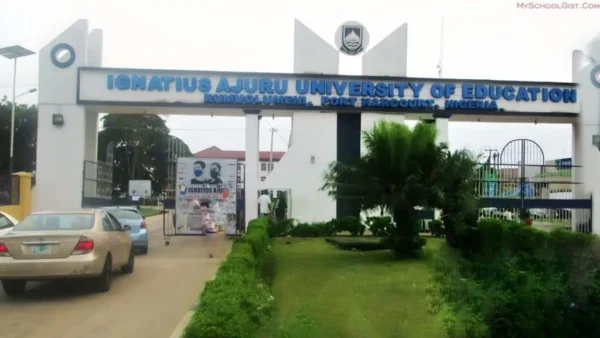
Ignatius Ajuru University Of Education (IAUE)
Apply: IAUE Supplementary Admission form 2025/2026 on sale

IAUE Supplementary Admission, official notice

Ignatius Ajuru University of Education, Port Harcourt, has thrown open the doors for supplementary admission for the 2025/2026 session. This comes as a second chance for UTME candidates who picked IAUE as their first choice but are still waiting in line for a spot.

It is more than just a notice, it is a reminder that timing matters. The application runs for only two weeks, and the deadline is firm. Miss it and the gate closes, simple as that.

Courses open for IAUE Supplementary Admission

The list of available programmes is wide, covering almost every corner of the academic field. Here is a rundown.

Faculty of Humanities, B.A

  • French and International Studies
  • Religious and Cultural Studies
  • Music
  • Fine and Applied Arts
  • Linguistics
  • Philosophy
  • Peace and Conflict Resolution

Faculty of Management Sciences, B.Sc

  • Office and Information Management
  • Banking and Finance
  • Entrepreneurship
  • Employment and Human Resources Management
  • Hospitality and Tourism Management

Faculty of Natural and Applied Sciences, B.Sc

  • Chemistry
  • Mathematics
  • Physics
  • Integrated Science
  • Geophysics
  • Industrial Chemistry
  • Statistics

Faculty of Social Sciences, B.Sc

  • Geography and Environmental Studies
  • Social Work
  • Library and Information Science
  • Petroleum Economics and Policy Studies

Faculty of Vocational and Technical Education, B.Sc.Ed

  • Agricultural Education
  • Home Economics
  • Technical Education (Building, Electrical, Electronics options)

Faculty of Agriculture, B.Sc

  • Agricultural Economics and Extension
  • Animal Science and Fisheries
  • Crop and Soil Science

Faculty of Education, B.Ed and B.Sc.Ed

  • Early Childhood
  • Primary Education Studies
  • Special Education
  • Educational Management
  • Adult Education (English, Biology options)
  • Educational Technology

Department of Arts Education

  • Education and French
  • Education and Religious Studies
  • Education and Music
  • Education and Fine and Applied Arts

Department of Business Education

  • Marketing Education
  • Secretarial Education

Department of Science Education

  • Education and Chemistry
  • Education and Mathematics
  • Education and Physics
  • Education and Integrated Science

Department of Social Science Education

  • Library and Information Science
  • Education and Geography

Quite a long list, isn’t it? Candidates need to look closely and pick a match with their O’level and UTME subjects.

Step-by-step procedure for IAUE Supplementary Admission

To apply, candidates are advised to follow these steps carefully:

  • First, go to your JAMB profile and change your course to the one you want at IAUE. Make sure the subject combination fits, or you risk disqualification.
  • Upload your O’level results on the JAMB portal.
  • Head to the IAUE University Portal and log into your profile.
  • Pay the non-refundable fee of ₦12,000 through the portal.
  • Select your preferred new course of study on the portal. Double-check the IBASS for admission requirements before confirming.
  • Keep an eye on your JAMB CAPS to know when admission is offered.
  • Application window: Tuesday, 30th September 2025 to Friday, 10th October 2025. No extension will follow, so waiting till the last minute might be risky.

Who is eligible for IAUE Supplementary Admission

  • Only candidates who scored 150 and above in UTME.
  • Only those who chose IAUE as their first choice.
University of Calabar (UNICAL)
See UNICAL Revised Academic Calendar 2025/2026

University of Calabar has released its revised academic calendar for 2025/2026. It covers first and second semester dates, from resumption to exams and breaks. Students are advised to note the schedule and follow carefully.

University of Calabar, UNICAL Acceptance Fee for Admission

First look at the UNICAL Academic Calendar

The University of Calabar has put out its revised academic calendar for the 2025/2026 session. For students, this is more than a dry timetable. It is the clock that shapes daily life on campus, the guidepost for when to sit tight and when to take a breath.

Let’s walk through what the year looks like, month by month.

First Semester dates

The first semester begins with fresh arrivals and key campus events.

September 2025

  • 24th – Inaugural Lecture
  • 26th – New students arrive
  • 29th – Screening and registration for new students
  • 30th – Returning students arrive

October 2025

  • 2nd – Registration for returning students starts
  • 2nd – Lectures for all students begin
  • 6th – Solemn Assembly
  • 8th – Inaugural Lecture
  • 22nd – Inaugural Lecture
  • 27th to 31st – Supplementary Examination

November 2025

  • 3rd to 7th – Summer Examination
  • 5th – Inaugural Lecture
  • 10th – Late registration begins
  • 13th to 14th – Freshers’ Orientation
  • 17th – Late registration ends
  • 19th – Inaugural Lecture
  • 21st – Matriculation Ceremony
  • 24th to 28th – Continuous Assessment
  • 26th – Inaugural Lecture

December 2025

  • 1st – Add and drop courses close
  • 3rd – Inaugural Lecture
  • 8th to 12th – Students’ Week
  • 17th – Inaugural Lecture
  • 19th – Christmas Break begins

January 2026

  • 9th – Students return from break
  • 19th to 24th – Revision week
  • 21st – Inaugural Lecture
  • 26th to 31st – GSS Exams

February 2026

  • 2nd – Other course exams begin
  • 26th – All exams end, semester closes

First Semester Summary

  • 12 weeks of lectures
  • 4 weeks of exams
  • Total: 16 weeks

Second Semester dates

The second semester also runs its full cycle of lectures, assessments, and exams.

March 2026

  • 18th – Inaugural Lecture
  • 20th – Students return to campus
  • 23rd – Registration begins for 500 Level (Stream B)
  • 23rd to 28th – 38th Convocation Ceremony
  • 30th – Lectures begin for all students

April 2026

  • 8th – Inaugural Lecture
  • 22nd – Inaugural Lecture
  • 27th – Late registration begins for 500 Level (Stream B)

May 2026

  • 4th – Late registration ends for 500 Level (Stream B)
  • 6th – Inaugural Lecture
  • 11th to 16th – Continuous Assessment
  • 20th – Inaugural Lecture

June 2026

  • 1st – Add and drop courses close for 500 Level (Stream B)
  • 3rd – Inaugural Lecture
  • 15th to 19th – Revision week
  • 22nd to 27th – GSS Exam
  • 29th – Exams for other courses begin

July 2026

  • 20th – Exams end
  • 21st – Long Vacation begins

Second Semester Summary

  • 12 weeks of lectures
  • 4 weeks of exams
  • Total: 16 weeks
UNICROSS Releases Academic Calendar for 2025/2026

The University of Cross River State has released the provisional academic calendar for 2025/2026 first semester. It covers resumption, registration, lectures, assessments, and examinations. All students are advised to take note of the dates and follow accordingly.

The University of Cross River State, fondly known as UNICROSS, has rolled out its academic calendar for the first semester of the 2025/2026 session. This schedule is more than dates on a sheet, it is the compass for students’ lives on campus, from the very first lecture to the last exam paper.

Some dates look routine, others carry weight like matriculation or convocation. Let us walk through the plan.

First semester highlights in the UNICROSS Academic Calendar

Week 1

  • 29th September 2025 – Arrival of new students, online fee payment, and registration
  • 29th September 2025 – Department board meeting to consider 2024/25 second semester results
  • 30th September 2025 – Faculty board meeting for results consideration
  • 1st October 2025 – National Holiday
  • 2nd October 2025 – Senate meeting

Week 2

  • 6th October 2025 – Old students return, registration continues
  • 7th October 2025 – Lectures begin for all students
  • 10th October 2025 – Classes continue

Week 3 and 4

  • 13th October 2025 – Lectures in full swing
  • 17th October 2025 – Teaching continues
  • 20th October 2025 – Regular lectures
  • 24th October 2025 – Lectures and registration still open

Week 5 to 6

  • 27th to 31st October 2025 – Lectures and registration across faculties
  • 3rd to 7th November 2025 – Lectures for all students
  • 6th November 2025 – Inaugural Lecture

Week 8

  • 10th November 2025 – Lectures, late registration begins
  • 10th to 14th November 2025 – First continuous assessment for all

Week 9

  • 17th November 2025 – Orientation for new students (Calabar Campus)
  • 18th November 2025 – Orientation for Okuku and Ogoja Campuses
  • 21st November 2025 – Lectures, late registration closes

Week 10

  • 24th November 2025 – Departmental board meetings
  • 25th November 2025 – Faculty board meetings
  • 27th November 2025 – Senate meeting
  • 28th November 2025 – Lectures continue

Week 11 to 12

  • 1st December 2025 – Lectures, second continuous assessment begins
  • 5th December 2025 – Assessment ends
  • 8th to 12th December 2025 – Regular classes
  • 9th December 2025 – Matriculation (Calabar Campus)
  • 10th December 2025 – Matriculation (Ogoja and Okuku Campuses)

Week 13

  • 15th to 19th December 2025 – Lectures continue
  • 18th December 2025 – Convocation lecture
  • 19th December 2025 – Undergraduate convocation, Christmas and New Year break starts
  • 20th December 2025 – Postgraduate convocation

Week 14

  • 5th to 9th January 2026 – Students return, revision begins, portal reopens for late payments
  • 6th January 2026 – Departmental board meetings
  • 7th January 2026 – Faculty board meetings
  • 8th January 2026 – Senate meeting
  • 9th January 2026 – Deadline for late fee payment, registration closes

Week 15 to 18

  • 12th to 16th January 2026 – Examinations for final year students, revision for others
  • 19th to 23rd January 2026 – Examinations begin for other students
  • 26th to 30th January 2026 – Exams continue
  • 2nd to 4th February 2026 – Examinations conclude for all
  • 4th February 2026 – Inaugural Lecture
  • 5th to 6th February 2026 – CBT examinations for 100 Level students
Afe Babalola University
ABUAD Releases Academic Calendar for 2025/2026 Session

Afe Babalola University has published the official academic calendar for 2025/2026. It covers resumption, registration, lectures, assessments, exams, and breaks for both semesters. Students are urged to keep track of the dates and follow them closely.

A fresh start with clear dates

The management of Afe Babalola University, Ado-Ekiti (ABUAD) has rolled out the academic calendar for the 2025/2026 session. It is the university’s way of laying the road map, so students do not get caught off guard. These dates will guide both fresh and returning students through the year, from orientation to convocation and down to examinations.

ABUAD Academic Calendar – first semester

Resumption of fresh students

  • College of Engineering – Monday, 22nd September 2025
  • College of Law – Tuesday, 23rd September 2025
  • College of Medicine and Health Sciences – Wednesday, 24th September 2025
  • College of Sciences and Pharmacy – Thursday, 25th September 2025
  • College of Social and Management Sciences – Friday, 26th September 2025

Registration (Fresh Students): Monday, 6th October to Friday, 17th October 2025
Lectures (Fresh Students): Begin on Monday, 29th September 2025

Resumption of returning students

  • College of Engineering – Monday, 29th September 2025
  • College of Law – Tuesday, 30th September 2025
  • College of Medicine and Health Sciences – Wednesday, 1st October 2025 (same day as National Day holiday)
  • College of Sciences and Pharmacy – Thursday, 2nd October 2025
  • College of Social and Management Sciences – Friday, 3rd October 2025

Registration (Returning Students): Monday, 6th October 2025
Lectures (Returning Students): Begin on Monday, 6th October 2025
Late Registration with Penalty: Monday, 20th October to Friday, 31st October 2025

Key events in first semester

  • Orientation: Wednesday, 8th – Friday, 10th October 2025
  • Convocation: Tuesday, 21st October 2025
  • End of Year Break: Wednesday, 17th December 2025 to Monday, 5th January 2026
  • Christmas Day: Thursday, 25th December 2025
  • ABUAD Academic Commencement Anniversary: Sunday, 4th January 2026
  • Lectures resume: Monday, 5th January 2026
  • Continuous Assessment: Wednesday, 21st January 2026
  • First Semester Exams: Monday, 26th January – Friday, 13th February 2026
  • End of First Semester Break: Saturday, 14th – Friday, 27th February 2026
  • Processing of Results: Monday, 16th February – Friday, 6th March 2026
  • Boards and Senate Meetings: 9th March to 25th March 2026
  • Online Results Release: Friday, 27th March 2026

ABUAD Academic Calendar – second semester

Resumption and registration

  • Students return: Monday, 2nd March 2026
  • Eid El-Fitr (Tentative): Friday, 20th – Saturday, 21st March 2026
  • Online Course Registration: Monday, 16th – Saturday, 28th March 2026
  • Lectures run: Monday, 2nd March – Friday, 23rd May 2026
  • Late Registration with Penalty: Monday, 30th March – Friday, 10th April 2026
  • Easter Break: Friday, 3rd – Monday, 6th April 2026
  • Id-El Kabir (Tentative): Wednesday, 27th – Thursday, 28th May 2026

Exams and closing dates

  • Final Year Exams: Monday, 1st – Friday, 5th June 2026
  • Exams for Other Students: Monday, 8th – Friday, 19th June 2026
  • Vacation begins: Saturday, 20th June 2026
  • Marking and Result Processing: Monday, 22nd June – Friday, 10th July 2026
  • Boards and Senate Meetings: 13th July – 29th July 2026
  • End of Session: Friday, 31st July 2026

Next academic year

The new session for 2026/2027 is set to kick off on Monday, 21st September 2026.

See UNIOSUN Departmental Cut Off Marks 2025/2026

Osun State University has released the UNIOSUN Cut Off Marks for 2025/2026. This notice explains the scores for each course and the general rules for screening. Please read on for the full list and simple steps to act now.

UNIOSUN Cut Off Marks, what this guide covers

The cut off marks for Osun State University are out for 2025/2026. This is your quick map, neat and plain. You will see the scores for each course, the general rule for screening, and what to do if your mark sits below a course line. I pause here, deep breath, then we go.

  • Simple breakdown of every course
  • General JAMB rule for the session
  • Clear links for change of course and extra help

About Osun State University, short background

UNIOSUN runs a multi-campus setup across six towns, approved by the National Universities Commission in December 2006. The campuses sit in Osogbo, Ikire, Okuku, Ifetedo, Ipetu Ijesha, and Ejigbo. That is the frame, now the figures.

UNIOSUN Cut Off Marks, course-by-course list

Each line shows General and Indigene/Catchment marks.

  1. B. Agric. Economics – General: 57 | Indigene/Catchment: 46.4
  2. B. Agric. Extension – General: 56.5 | Indigene/Catchment: 44.5
  3. B. Agric. Forestry – General: 50 | Indigene/Catchment: 40
  4. B. Agric. Agronomy – General: 54.8 | Indigene/Catchment: 44.6
  5. B. Agric. Animal Science – General: 58.5 | Indigene/Catchment: 40.5
  6. B. Agric. Fisheries & Aquaculture – General: 55 | Indigene/Catchment: 45.5
  7. B. Agric. Wildlife Management – General: 54 | Indigene/Catchment: 44.8
  8. B.A. (Ed) English – General: 60.5 | Indigene/Catchment: 45.3
  9. B.A. (Ed) Chemistry – General: 55 | Indigene/Catchment: 45
  10. B.A. (Ed) Economics – General: 60.8 | Indigene/Catchment: 46.2
  11. B.A. (Ed) Education Guidance & Counselling – General: 63.5 | Indigene/Catchment: 50.9
  12. B.A. (Ed) Education Management – General: 59.9 | Indigene/Catchment: 50
  13. B.Sc. (Ed) Mathematics – General: 54.3 | Indigene/Catchment: 40
  14. B.Sc. (Ed) Political Science – General: 61.7 | Indigene/Catchment: 49.6
  15. B.Sc. (Ed) Biology – General: 56.8 | Indigene/Catchment: 44.4
  16. B.Sc. (Ed) Educational Technology – General: 55.2 | Indigene/Catchment: 44.2
  17. B.Sc. (Ed) Physics – General: 49.1 | Indigene/Catchment: 40
  18. B.Sc. (Ed) Computer Science – General: 54.6 | Indigene/Catchment: 44.3
  19. B.Sc. (Ed) Business Education – General: 59.4 | Indigene/Catchment: 45.9
  20. B.Sc. (Ed) Environmental Education – General: 47.6 | Indigene/Catchment: 40
  21. B.Ed. Adult Education – General: 55.5 | Indigene/Catchment: 46.8
  22. B.Sc. Anatomy – General: 62.8 | Indigene/Catchment: 56
  23. B. Health Information Management – General: 60.2 | Indigene/Catchment: 55.2
  24. B. Environmental Health Science – General: 59.6 | Indigene/Catchment: 55.2
  25. M.B.B.S. – General: 85.3 | Indigene/Catchment: 82.4
  26. B.Sc. Nursing – General: 77.5 | Indigene/Catchment: 74
  27. B.Sc. Physiology – General: 63.8 | Indigene/Catchment: 56.8
  28. B.Sc. Public Health – General: 65.6 | Indigene/Catchment: 61.9
  29. B.MLS – General: 74.7 | Indigene/Catchment: 71.8
  30. B.Sc. Nutrition & Dietetics – General: 63 | Indigene/Catchment: 57.8
  31. B.Sc. Radiography & Radiation Science – General: 73.1 | Indigene/Catchment: 68.8
  32. B.Sc. Pharmacology – General: 68.2 | Indigene/Catchment: 62.6
  33. B.A. English & International Studies – General: 65.9 | Indigene/Catchment: 58
  34. B.A. French & International Studies – General: 65.1 | Indigene/Catchment: 45
  35. B.A. History & International Studies – General: 66.1 | Indigene/Catchment: 56.9
  36. B.A. Linguistics & Communication Arts – General: 67.8 | Indigene/Catchment: 59.2
  37. B.A. Philosophy – General: 68.8 | Indigene/Catchment: 60.5
  38. B.A. Theatre Arts – General: 64.4 | Indigene/Catchment: 59.2
  39. B.A. Tourism Studies – General: 63 | Indigene/Catchment: 52
  40. B.A. Yoruba – General: 60.5 | Indigene/Catchment: 43
  41. B.A. Arabic Language & Literature – General: 62.5 | Indigene/Catchment: 50
  42. B.A. Islamic Studies – General: 58.3 | Indigene/Catchment: 50
  43. B.A. Christian Religion Studies – General: 47.5 | Indigene/Catchment: 45
  44. B.Sc. Mass Communication – General: 72 | Indigene/Catchment: 63.7
  45. B.Sc. Advertising – General: 47.6 | Indigene/Catchment: 45
  46. B.Sc. Public Relations – General: 54.9 | Indigene/Catchment: 45
  47. B.Sc. Broadcasting – General: 60.4 | Indigene/Catchment: 43
  48. B.Sc. Journalism & Media Studies – General: 64.1 | Indigene/Catchment: 47.3
  49. LLB (Bachelor of Law) – General: 79.4 | Indigene/Catchment: 75.6
  50. Common & Islamic Law – General: 73.3 | Indigene/Catchment: 69.7
  51. B.Sc. Criminology & Security Studies – General: 69.4 | Indigene/Catchment: 63.5
  52. B.Sc. Peace & Conflict Studies – General: 62.1 | Indigene/Catchment: 49.2
  53. B.Sc. Accounting – General: 70.7 | Indigene/Catchment: 64.9
  54. B.Sc. Banking & Finance – General: 65.8 | Indigene/Catchment: 60.6
  55. B.Sc. Marketing – General: 64 | Indigene/Catchment: 57
  56. B.Sc. Geography – General: 50 | Indigene/Catchment: 45
  57. B.Sc. Business Administration – General: 66.2 | Indigene/Catchment: 61.3
  58. B.Sc. Economics – General: 68 | Indigene/Catchment: 60.3
  59. B.Sc. Entrepreneurial Studies – General: 61.4 | Indigene/Catchment: 48.9
  60. B.Sc. Industrial Relations & Personnel Management – General: 62.2 | Indigene/Catchment: 52.8
  61. B.Sc. Political Science – General: 67.8 | Indigene/Catchment: 61.4
  62. B.Sc. Sociology – General: 67.2 | Indigene/Catchment: 60.5
  63. B.Sc. International Relations & Diplomacy – General: 70.2 | Indigene/Catchment: 63.4
  64. B.Sc. Cooperative & Rural Development – General: 56.5 | Indigene/Catchment: 45
  65. B.Sc. Public Administration – General: 62.9 | Indigene/Catchment: 56.7
  66. B.Sc. Psychology – General: 64.8 | Indigene/Catchment: 52
  67. B.Sc. Demography & Social Statistics – General: 58.4 | Indigene/Catchment: 45
  68. B.Sc. Social Work – General: 63.3 | Indigene/Catchment: 48.8
  69. B.Sc. Development Studies – General: 50 | Indigene/Catchment: 40
  70. B.Sc. Politics, Philosophy & Economics – General: 50 | Indigene/Catchment: 45
  71. B.Sc. Local Government & Development Studies – General: 50 | Indigene/Catchment: 40
  72. B.Sc. Social Standards – General: 50 | Indigene/Catchment: 40
  73. B.Sc. Transport Management – General: 50 | Indigene/Catchment: 40
  74. B.Eng. Agric. Engineering – General: 58.1 | Indigene/Catchment: 45.4
  75. B.Eng. Chemical Engineering – General: 64.1 | Indigene/Catchment: 48.6
  76. B.Sc. Building – General: 58.8 | Indigene/Catchment: 50.5
  77. B.Sc. Estate Management – General: 57 | Indigene/Catchment: 49.3
  78. B.Sc. Food Science & Technology – General: 60.4 | Indigene/Catchment: 54.4
  79. B.Sc. Statistics – General: 56.5 | Indigene/Catchment: 43.3
  80. B.Eng. Civil Engineering – General: 67.1 | Indigene/Catchment: 61.6
  81. B.Eng. Electrical/Electronics Engineering – General: 65.9 | Indigene/Catchment: 59.5
  82. B.Eng. Mechanical Engineering – General: 66 | Indigene/Catchment: 59.8
  83. B.Sc. Biochemistry – General: 62.8 | Indigene/Catchment: 57
  84. B.Sc. Biotechnology – General: 59.8 | Indigene/Catchment: 46.1
  85. B.Sc. Chemistry – General: 58.2 | Indigene/Catchment: 47.1
  86. B.Sc. Computer Science – General: 68.1 | Indigene/Catchment: 62.3
  87. B.Sc. Cybersecurity – General: 66 | Indigene/Catchment: 61.2
  88. B.Sc. Geology – General: 57.7 | Indigene/Catchment: 43
  89. B.Sc. Industrial Chemistry – General: 59.2 | Indigene/Catchment: 43.5
  90. B.Sc. Information System – General: 54.4 | Indigene/Catchment: 46.3
  91. B.Sc. Mathematics – General: 58.2 | Indigene/Catchment: 45
  92. B.Sc. Microbiology – General: 62.5 | Indigene/Catchment: 56.2
  93. B.Sc. Plant Biology – General: 54.4 | Indigene/Catchment: 45
  94. B.Sc. Science Laboratory Technology – General: 62.9 | Indigene/Catchment: 51.7
  95. B.Sc. Software Engineering – General: 65.9 | Indigene/Catchment: 58.9
  96. B.Sc. Urban & Regional Planning – General: 55.4 | Indigene/Catchment: 45
  97. B.Sc. Animal & Environmental Biology – General: 54.2 | Indigene/Catchment: 42.3
  98. B.Sc. Physics with Electronics – General: 57.2 | Indigene/Catchment: 46.7
  99. BLIS Library & Information Science – General: 55.9 | Indigene/Catchment: 46.1
  100. Industrial Mathematics – General: 50 | Indigene/Catchment: 45
  101. B.Sc. Quantity Survey – General: 58.3 | Indigene/Catchment: 53.7
  102. B.Sc. Architecture – General: 62.8 | Indigene/Catchment: 55.8
  103. B.Sc. Information Technology – General: 60.9 | Indigene/Catchment: 55
  104. B.Sc. Brewing Science & Technology – General: 50 | Indigene/Catchment: 40
  105. B.Sc. Family & Consumer Science – General: 50 | Indigene/Catchment: 45
  106. B.Eng. Computer Engineering – General: 63.1 | Indigene/Catchment: 56.3
  107. B.Eng. Mechatronics Engineering – General: 63.8 | Indigene/Catchment: 49.3
  108. B.Sc. Data Science – General: 59.6 | Indigene/Catchment: 45

Tidy list, long list, but it answers the big question, right.

UNIOSUN Cut Off Marks, general JAMB rule

  • General screening mark: 160 and above for candidates who chose UNIOSUN as First choice.
  • Higher mark of 200 applies to Nursing, Medicine, Law, Common and Islamic Law.

If your score is below 200 for those higher courses

You can switch to another suitable programme within UNIOSUN.

University of Calabar (UNICAL)
UNICAL Announces Resumption Date for 2025/2026 Session

The University of Calabar has fixed resumption dates for the 2025/2026 academic year. New students are to resume on 29th September while returning students resume 2nd October. All students are encouraged to follow the schedule closely.

University of Calabar, UNICAL Acceptance Fee for Admission

Official word from UNICAL

The University of Calabar has now made public the resumption timetable for the 2025/2026 academic year. The notice, signed by the Registrar, Dr (Mrs) Chukwuka Icha, clears the air and puts dates in black and white

For many students, this is more than just a line in a release. It is the start of a new pace, a reminder that the holiday clock is ticking down.

Key dates for UNICAL resumption

  • New students: Arrival on campus Monday, 29th September 2025. Screening and registration start Tuesday, 30th September.
  • Returning students: Expected back on Thursday, 2nd October 2025. Registration opens that same day.
  • Lectures for all: Begin on Monday, 6th October 2025.
  • Late registration: Runs from Monday, 13th October to Friday, 14th October, closing fully by Wednesday, 19th October 2025.
  • Supplementary exams: Scheduled Monday, 3rd November to Friday, 7th November 2025.
  • Summer exams: Hold Wednesday, 5th November 2025.

A gentle reminder

The management has urged students to keep in step with the revised calendar. Missing a date, whether by choice or mistake, could mean stress later on. So mark it down, circle it in red if you must.

For those who want to see the bigger picture, you may check the full UNICAL academic calendar.

Federal University of Agriculture Abeokuta, FUNAAB
Ongoing: FUNAAB Inter-University Transfer Form 2025/2026

FUNAAB has opened applications for inter-university transfers for the 2025/2026 session. Students from recognised universities with the right grades can now apply by following the outlined steps. Interested persons are asked to act within the given time frame and meet all requirements.

Official announcement from FUNAAB

The Federal University of Agriculture, Abeokuta (FUNAAB) has thrown open the gates for students who wish to move from their current schools. The notice came from the Deputy Registrar I, Senate and Admissions, Dr Abdussobur Salaam, and it spells out exactly what is expected before a transfer request is even looked at.

For students seeking a fresh start or a better fit, this is a welcome chance. But, as always, there is fine print and some stiff boxes to tick.

Basic conditions for FUNAAB inter-university transfer

Applicants must:

  • Already be students of recognised Nigerian universities, with admission approved by JAMB.
  • Present an official transcript. The score cut-off is a Cumulative Grade Point Average (CGPA) of 3.00 for Agricultural programmes and 3.50 for Engineering and Science programmes, measured on a 5.00-point scale. This must reflect the student’s standing at the end of the second semester of the current year.
  • Pay a ₦40,000 non-refundable fee, which already includes REMITA charges. Payment begins from Tuesday, 23rd September 2025.

These are not just formalities, they are the first hurdles. Missing any of them could mean a closed door before the process even begins.

Step-by-step application process

Interested candidates should follow these steps with care:

  1. Go to the FUNAAB admission portal.
  2. Read the section on inter-university transfer, line by line.
  3. Log in using the JAMB registration number found on the admission letter.
  4. Fill out the online form and print a copy.
  5. Submit the printed form at the Senate and Admissions Unit.
Federal University of Lafia (FULafia)
Steps to Check FULAFIA Merit Admission List 2025/2026

FULAFIA has posted the 2025–2026 admission list. Applicants are told to check their JAMB CAPS for their status and act fast. Please read on for steps and meanings of responses you may see.

The Federal University of Lafia has finally made public its admission list for the 2025–2026 academic session. Many families have been waiting for this, and now the word is out. If you applied, your name might just be sitting there, waiting to be clicked on. Do not delay, because the checking is already open.

How to Check FULAFIA Admission List

Here is how you can confirm your admission status through the JAMB CAPS portal:

  • Go to the JAMB EFacility portal.
  • Sign in with your JAMB username and password.
  • Scroll down and select Check Admission Status.
  • Tap on Access my CAPS.
  • Click Admission Status to see your offer.

A little side note, if you are using a phone, you may not see the full page. Many students get stuck with only the welcome screen showing. Switch your browser to desktop mode, especially if you are on Chrome, then you will see everything.

What the Responses Mean

When you check, you may see different replies. Each one carries its own meaning:

  • Admission Offered: Your admission is ready. Accept or reject it through CAPS, simple as that.
  • Admission in Progress (AIP): Your school has said yes, but JAMB has not given the final nod yet.
  • Recommended: You are on the table for JAMB’s review. Hold on.
  • Not Admitted: Your name is not on the list at this time. Could be your school has not pushed out its full list yet.
  • Pending: Your application is still cooking, no final word.

What to Do Next After Admission

Candidates who see an offer must act. Send ACCEPT or REJECT to 55019 or 66019 from your JAMB-registered phone number. After you accept, go ahead and print your JAMB admission letter. Keep it safe, because you will need it later.

Peaceland College of Education
Peaceland College of Education IJMB Admission Form 2025/2026

Peaceland College of Education, Enugu, has opened its IJMB admission for 2025–2026. The programme offers a way into 200-level university without JAMB. Read below for details on who can apply, how to apply, and the benefits.

The gates have opened. Peaceland College of Education in Enugu is calling on students who wish to step into university through the IJMB route. The admission form for the 2025–2026 academic session is now on sale. For many young people, this is not just a form, it is a second chance, a door to higher education.

What the IJMB Programme Means

The Interim Joint Matriculation Board Examination, simply known as IJMB, is a special programme. It was created for those who did not meet the direct entry mark for university. With a successful pass, candidates gain direct entry into 200 level at Peaceland or other schools that accept it.

It is short, only about nine months, and its results do not expire. That means you can hold on to it for years, like a key that never rusts.

Who Can Apply for IJMB at Peaceland

The college is inviting all interested candidates who want to take part in the 2025–2026 IJMB session. The main condition is simple, you must be ready and willing to study. The form is open to all, as long as you want to move forward into a degree programme.

Benefits of Joining IJMB at Peaceland College

Students often ask, why choose IJMB. The answers are quite clear:

  • You can jump straight into 200 level in the university.
  • No need for JAMB or UTME score to start.
  • Your result never expires, it stays valid for life.
  • It is accepted across Nigerian universities.
  • The course period is about nine months, not too long.

Picking Your Subject Combination

Each candidate will take only three subjects for the final IJMB exams. These subjects matter a lot, because they connect to your future course.

The college advises students to use the current JAMB brochure and also check JAMB subject combinations before deciding. It is better to make this choice wisely, so you do not paint yourself into a corner later.

How to Apply for Peaceland College IJMB Admission

The process is straightforward, but you need to pay attention:

Some prefer the online way, others like face-to-face. Either path works, as long as you complete it.

Why Students Pick Peaceland College of Education

Peaceland College says it is committed to giving quality learning in a safe and supportive space. For many, that is reason enough. For others, it is the simple fact that the college offers another shot at higher education, something they thought was lost.

For questions, applicants can call 08081104566 and speak to the school directly.

Peaceland College of Education
Peaceland College of Education (ABSU) Post UTME Form 2025/2026

Peaceland College of Education, Enugu, in partnership with Abia State University, has opened applications for its 2025–2026 Degree Post UTME. Interested candidates are advised to review the requirements and apply through the official channels. Please read on for details.

The notice has gone out. Peaceland College of Education, Enugu, working hand in hand with Abia State University, Uturu, has released its Degree Post UTME form for the 2025–2026 academic session. For many young men and women, this is the long-awaited opening to study and earn a degree in education.

The college is inviting applications from qualified students, and the call is as clear as a bell. If you have ever thought about becoming a teacher or working in education, the gate is now wide open.

Courses Available Under the Programme

The Post UTME covers a wide spread of degree courses under several departments. Let us take a look:

  • Arts and Social Science Education
    • Economics/Education
    • English/Education
    • Igbo/Education
    • Political Science/Education
  • Science Education
    • Biology/Education
    • Chemistry/Education
    • Computer Science/Education
    • Health Education
    • Integrated Science/Education
    • Mathematics/Education
    • Physics/Education
  • Vocational Education
    • Business Education
    • Accounting Education
    • Office Technology Management Education
  • Educational Foundations
    • Educational Management
    • Guidance and Counselling
    • Primary/Elementary Education
  • School of Education
    • Educational Foundation and Administration
    • Curriculum and Instruction
    • Educational Psychology
    • General Studies Education
    • Primary Education Studies

Plenty to pick from, really. Each one a pathway into teaching and learning.

Entry Requirements for Admission

Before you dream too far, there are conditions. These are the boxes every applicant must tick.

Basic Entry Demands

  • Five credit passes in one sitting, including English language.
  • Or six credits in two sittings from SSCE, GCE O’Levels, or NECO.

UTME Requirements

Direct Entry Option

For those going through direct entry, the bar is a little different:

  • Five credits in WAEC, NECO, or an equivalent exam.
  • Plus, at least one of these: NCE, A-Level GCE, IJMB, OND, HND, or even a degree in a related course.

How to Apply for Peaceland College Degree Post UTME

Application is fairly simple but should be done carefully:

For those with burning questions, dial 08081104566 for direct enquiries.

Kariyoma College of Nursing
Kariyoma College of Nursing Post UTME Form 2025/2026

Kariyoma College of Nursing Sciences, Lafia, has opened Post UTME applications for ND and HND Nursing for 2025–2026. Forms are on sale at ₦15,000 between 22 and 30 September. Read below for full requirements and details.

The management of Kariyoma College of Nursing Sciences, Lafia, has sounded the bell. Admission forms for ND and HND Nursing programmes are now on sale for the 2025–2026 academic session. For many young men and women with dreams of wearing the nurse’s uniform, this is the starting line.

The forms cost ₦15,000 each, non-refundable, and sales run from 22 September 2025 to 30 September 2025. Applicants are to pick up their forms at the College ICT centre, right inside Kariyoma College of Nursing Sciences, Lafia.

Eligibility for Kariyoma College Post UTME

Before you rush off, there are conditions to meet. The school has spelt them out clearly:

  • You must hold WAECNECONABTEB, or NBAIS with five credits in English, Mathematics, Chemistry, Physics, and Biology.
  • Results must come from not more than two sittings.
  • A score of 140 or above in the 2025 JAMB UTME is required.
  • Candidates must be at least 16 years old.
  • NABTEB cannot be mixed with any other certificate.

These are the bars to cross before stepping further.

Extra Information for Applicants

The school has said that the date for the examination and interview will be made public later. Applicants are advised to stay alert for updates. Sometimes these notices come fast, so best to keep your ears to the ground.

Contact Details

For enquiries, complaints, or extra details, you can reach the school here:

  • Address: No. 21 Musa Illu Street, Bukan Ari, Off Shendam Road, Lafia, Nasarawa State.
  • Phone numbers: 08123939278, 07061509091, 07067892441.
Univerisity of Uyo - UNIUYO
How to Check UNIUYO Admission List 2025/2026 Online

The University of Uyo has released the 2025–2026 admission list. Applicants can now check their status on the JAMB CAPS portal and take action where needed. Please read below for clear steps and what each response means.

The wait is over. The University of Uyo (UNIUYO) has published its admission list for the 2025–2026 academic year, and the news has already sent ripples of excitement through many homes. For those who sat through the screening exercise, the moment of truth has arrived. Some will smile, others may have to wait a little longer, but the door has been opened.

Checking the UNIUYO Admission List

Right now, admission status can only be confirmed through the JAMB CAPS portal. The steps are quite direct, but still worth spelling out:

  • Go to the JAMB EFacility portal.
  • Sign in with your JAMB username and password.
  • Scroll down and click on Check Admission Status.
  • Select Access my CAPS.
  • Tap on Admission Status to see your offer.

Some students using phones may get stuck with just the welcome page showing. To fix this, switch your browser to desktop mode. If you are on Chrome, simply click the option that says request desktop site. Once that is done, the full page will appear.

What Each Response Means on JAMB CAPS

You might see different messages when you check. Each has its own weight:

  • Admission Offered: Congratulations, your name is on the list. You can accept or reject on CAPS.
  • Admission in Progress (AIP): Your school has sent your name forward, but JAMB is still reviewing it.
  • Recommended: The school has considered you, but JAMB has to give final approval.
  • Not Admitted: Your name is not on the list yet. It could mean the school has not released all names, or your case is still under review.
  • Pending: The process is not finished. Your file is still on the table.

What to Do After Admission

If you see an offer, do not waste time. Send ACCEPT or REJECT to 55019 or 66019 with the phone number you used for JAMB. Once you accept, you should also print your JAMB admission letter for record purposes.